
Effortless Elegance: A Comprehensive Guide to French Style Homes Interior Design
The allure of French style homes interior design is one of timeless romance, effortless elegance, and sophisticated history. This aesthetic is a captivating blend of formality and comfort, where antique grandeur meets lived-in, casual charm. A truly successful French style homes interior feels curated over generations, combining ornate details like gilded mirrors and crystal chandeliers with simple, rustic materials like linen and aged wood. It is a philosophy that rejects harsh minimalism, favoring instead the beauty of patina, history, and graceful imperfection. If you are captivated by homes that feel both profoundly elegant and warmly inviting, understanding the principles of French style homes interior design is essential. This style is not about opulence for its own sake, but about mastering the art of the nonchalant chic—making the luxurious look easy and accessible. This comprehensive guide will provide over 1500 words of actionable advice, breaking down the essential architectural features, the signature color palettes, the crucial furniture pieces, and the styling secrets necessary to authentically capture the enduring charm of the French style homes interior.
Part 1: The Architectural Canvas – History and Detail
The foundation of the French style homes interior lies in architectural details that celebrate history, craftsmanship, and classical proportions.
- The Importance of Paneling and Molding
- Wall Detailing: Walls are rarely plain. The French aesthetic demands detailed wall paneling (or boiserie)—decorative wooden molding applied to the walls, typically painted white or a soft color. This adds immense architectural texture and historical depth.
- Crown Molding and Trim: Ceilings are adorned with ornate crown molding and ceiling medallions (especially important for anchoring chandeliers). Trim should be substantial, refined, and always detailed.
- High Ceilings: The grandest French interiors feature high ceilings, which are essential for accommodating the tall mirrors and dramatic lighting fixtures that define the style.
- Parquet and Stone Floors
Flooring choices emphasize quality, durability, and classic European texture.
- Parquet Wood: Floors are often dark or mid-toned wood laid in classic geometric patterns, such as herringbone or chevron parquet. These patterns add subtle, sophisticated visual interest.
- Stone and Tile: In kitchens, entryways, and sunrooms, aged limestone, terracotta tiles, or black-and-white checkerboard tile are traditional choices, lending a sense of rustic French countryside (or Provençal) charm.
- Doors and Windows
- French Doors: Wide, elegant French doors (often opening onto balconies or patios) are key, maximizing light and enhancing the indoor-outdoor connection.
- Ornate Hardware: Door handles and window latches should be ornate, made of brass, bronze, or aged nickel, acting as small pieces of jewelry for the architecture.
Part 2: The Color Palette – Soft, Sophisticated Hues
The colors used in French style homes interior are deliberately soft and airy, creating a sophisticated backdrop for the darker antiques and gilded accents.
- Airy Neutrals and Pastels
The palette is light, muted, and elegant, preventing the space from feeling heavy.
- Soft Base Colors: Walls are typically painted in creamy whites, pale buttery yellows, soft grays (Greige), or muted stone colors. The intent is to keep the room light and reflective.
- Muted Accents: Color is introduced through soft, dusty pastels—think faded lavender, pale rose, gentle celadon green, and dusty blue. These colors should look like they have been faded by the sun over decades.
- Gilded Pop: Gold and brass are used as accent colors, appearing on mirrors, frames, and furniture details to add a necessary touch of antique luxury.
- Patterns and Fabrics
Patterns are traditional and often nature-inspired, but used selectively.
- Toile and Stripes: Toile de Jouy (scenic patterns, often in blue or red on a white background) is the quintessential French fabric. Classic stripes are also used on upholstery or walls.
- Natural Luxury: Textiles prioritize natural, high-quality, comfortable fabrics: linen, cotton, velvet, and silk. Linen, especially, is essential for its casual texture that balances the room’s formality.
Part 3: Furniture and Furnishings – Balanced Mix
The true secret to the French style homes interior is the intentional mixing of highly formal, ornate pieces with comfortable, simple ones.
- The Blend of Formality and Comfort
- Louis XVI and Rococo: Key furniture pieces often feature the graceful, curved lines of the Louis XV (Rococo) or the more structured lines of the Louis XVI style. Look for pieces with cabriole legs, carved detailing, and aged, painted finishes.
- The “Unfinished” Look: The finish is rarely perfect. Furniture should look aged, slightly distressed, or feature deliberate patina (chipped paint, worn gilding). This prevents the room from feeling like a museum and adds to the casual elegance.
- Comfortable Seating: Sofas and chairs should be deep and comfortable, often upholstered in simple, natural linen or canvas—the perfect contrast to the formal wood frames.
- Statement Pieces and Scale
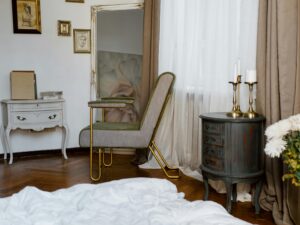
- The Commode: A bombé commode (a chest of drawers with a distinctly bulging, rounded front) is an iconic focal point, often topped with flowers or a lamp.
- Caned Furniture: Chairs or sofas with cane backs and seats are common, lending an airy, Provençal feel to the design.
- Dining Elegance: Dining tables are often heavy, distressed wood (like a farmhouse table) paired with more delicate, often painted, upholstered dining chairs.
Part 4: Accessories and Details – Curated and Chic
Accessories in the French style homes interior are glamorous, artistic, and reflective of a life well-lived.
- Mirrors and Lighting Drama
Lighting and reflective elements are used to inject sparkle and historic grandeur.
- The Trumeau and Gilt Mirror: An oversized, ornate mirror is essential, often featuring a gilded frame (gold or silver leaf). The mirror should look antique and should be tall enough to add vertical drama. A Trumeau mirror (a mirror set into a paneled wall section) is also highly authentic.
- Crystal and Iron: Lighting fixtures are dramatic. Choose a crystal chandelier (often slightly aged or oversized) for the main space, complemented by simple wrought iron or brass wall sconces.
- Curated Collections and Art
- Artful Clutter: Unlike stark minimalism, the French style allows for curated clutter. Display collections of antique silver, blue and white porcelain, or stacks of beautiful, aged books.
- Personalized Touches: Accessories should feel personal and artistic: antique busts, simple botanical prints in gilt frames, or fresh flowers (often peonies or roses) placed in a ceramic or glass vase.
- No Perfect Symmetry: While formal, the French style avoids the rigid symmetry of Colonial design. Furniture is placed casually and decor is often arranged in asymmetrical groupings (the Rule of Three) to ensure the room feels relaxed and authentic.
- The Fabric of Life (Linens and Pillows)
- Linens: Choose natural, breathable linens for bedding and curtains, allowing them to look slightly rumpled—this is the core of the effortless, relaxed French charm.
- Throw Pillows: Use a blend of plain linen pillows with patterned or velvet cushions that feature the muted accent colors, creating a soft, inviting texture on sofas and beds.
The elegance of French style homes interior design is achieved through the beautiful contradiction of balancing the ornate with the simple, the antique with the comfortable. By incorporating detailed paneling and molding, utilizing a light, sophisticated color palette, mixing gilded antiques with casual linen upholstery, and creating a sense of effortless, curated clutter, you can transform your space. This style offers a timeless, romantic sanctuary that is deeply inviting, celebrating the art of living with charm and unparalleled style.
(Word Count: ~1510 words)